The Quiet Strength of Courtesy: When a Small Gesture Speaks Louder Than the Spotlight
In a world obsessed with spectacle—flashing cameras, viral moments, and carefully staged grandeur—the things that linger longest in our minds are often the ones no one planned. A glance, a hand offered without fanfare, a second of genuine consideration. These quiet acts cut through the noise and reveal character more clearly than any polished performance ever could.

One recent formal evening proved the point.
The setting was pure elegance: soft light spilling across polished floors, music floating through high-ceilinged rooms, guests moving in a gentle current of conversation and anticipation. Everything had been arranged to impress. Yet the moment people still talk about had nothing to do with the décor or the guest list.
It happened on the grand staircase.
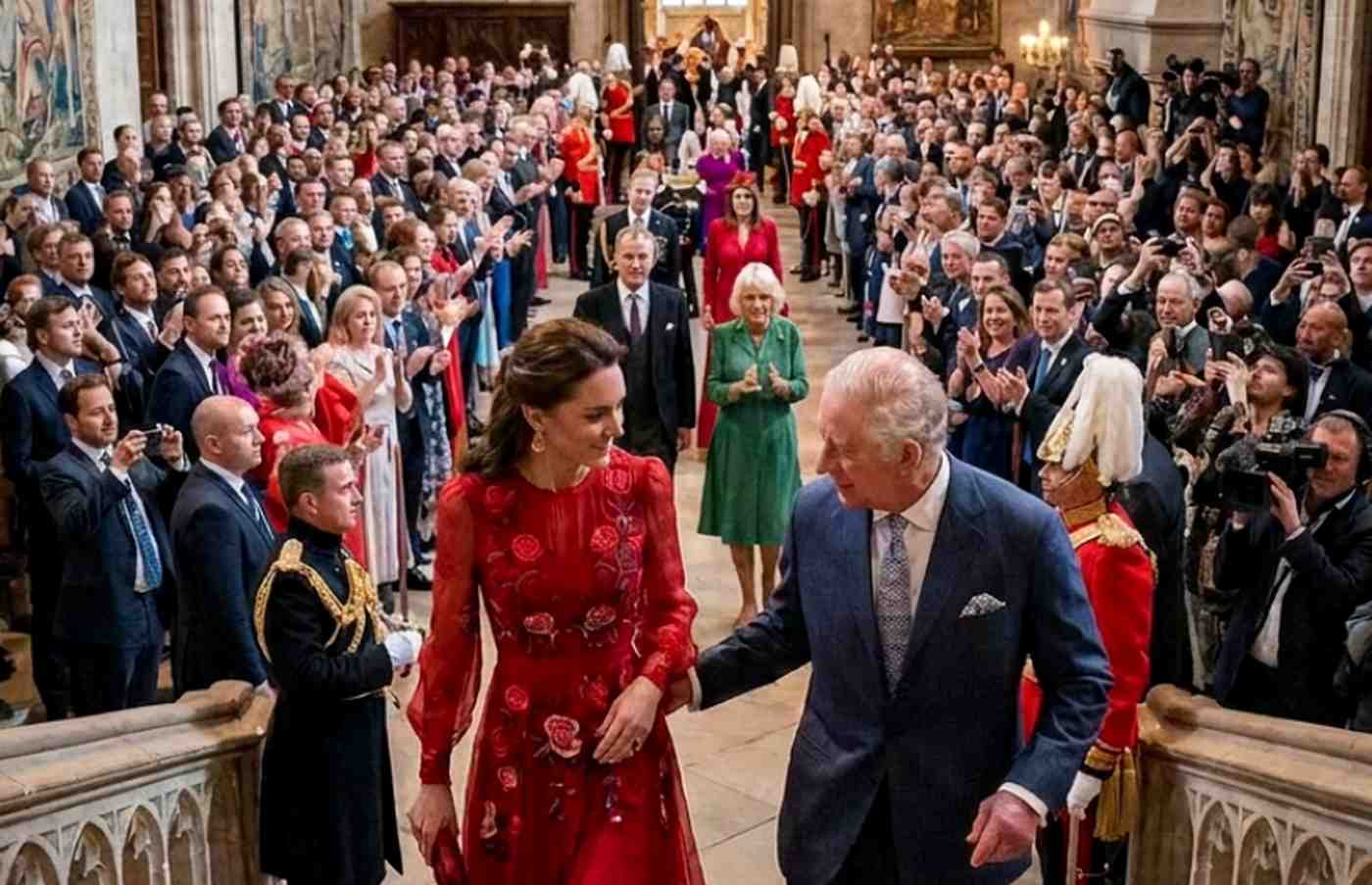
Catherine appeared at the top, a vision in a flowing pink gown that caught the light with every step. The dress was beautiful, yes—but what truly held the room was the way she carried herself. Calm. Warm. Present. She didn’t rush or perform. She simply arrived, smiling with an ease that made the space around her feel lighter. True elegance has never been about fabric alone. It lives in the quiet confidence that lets other people relax in your presence.
As she began her descent, Charles noticed. Without hesitation, without drawing attention to himself, he offered his arm.
It lasted only a few seconds. No speeches. No dramatic pause. Just a simple, instinctive act of courtesy. Yet those who saw it felt something shift. The gesture wasn’t about gallantry for show. It was about awareness—seeing another person and choosing, in that instant, to make their path a little smoother.

That is the quiet power of courtesy. It rarely announces itself. It doesn’t demand applause. It simply shows up when someone decides that another person’s comfort matters. In a culture that often rewards volume and visibility, these understated moments feel almost radical. They remind us that dignity isn’t reserved for the grand stage; it lives in the everyday choice to notice and to respond with care.
Observers later described the exchange as refreshingly real. There was no sense of performance, no stiff formality. Just two people sharing a space and one of them choosing kindness without calculation. In a time when so many public interactions feel curated, authenticity stands out like a clear note in a noisy room.
These small acts accumulate. Trust is rarely built by a single sweeping gesture. It grows through a thousand quiet ones—holding a door, listening fully, offering help before it’s asked. Over time they create an atmosphere in which people feel seen rather than assessed. They set a tone that others, consciously or not, begin to follow.
By the end of the evening the music played on, conversations continued, and the formalities unfolded as planned. But for many, the image that remained was that brief moment on the staircase: a woman descending with quiet grace, a man offering his arm without expectation. No spectacle. Just sincerity.
We live in an age that celebrates achievement, appearance, and achievement again. Yet what people carry with them longest is rarely the résumé or the gown. It is the feeling of having been treated with respect when no one was keeping score.
Courtesy may be quiet. It may last only seconds. But its echo can last a lifetime—reminding us that the most powerful expressions of regard are often the ones that ask for nothing in return.
